


Searching health and safety incident records at many organizations often reveals numerous cases where the root cause is attributed to “lack of situational awareness”. In some reports, it’s the only root cause identified. But what does that really mean?
Situational awareness is a person’s ability to perceive what’s happening in their environment, understand it, and take appropriate action based on that information. In a safety context, being situationally aware means perceiving a danger, comprehending how that danger poses a threat, and deciding how best to navigate that danger to stay out of harm’s way. Sounds a lot like risk assessment, doesn’t it?
To protect workers from unnecessary harm, organizations should focus on helping employees become better at identifying and managing risk. Yet many still struggle to create risk management processes that provide real value.
In this blog, we’ll explore some of the key pitfalls that organizations face when trying to improve their workforce’s ability to manage risk. We’ll also look at how to overcome these challenges through digital risk management.
What Is Digital Risk Management?
Digital risk management refers to the use of technology, such as mobile apps, cloud platforms, and analytics to identify, assess, and mitigate risks in real time.
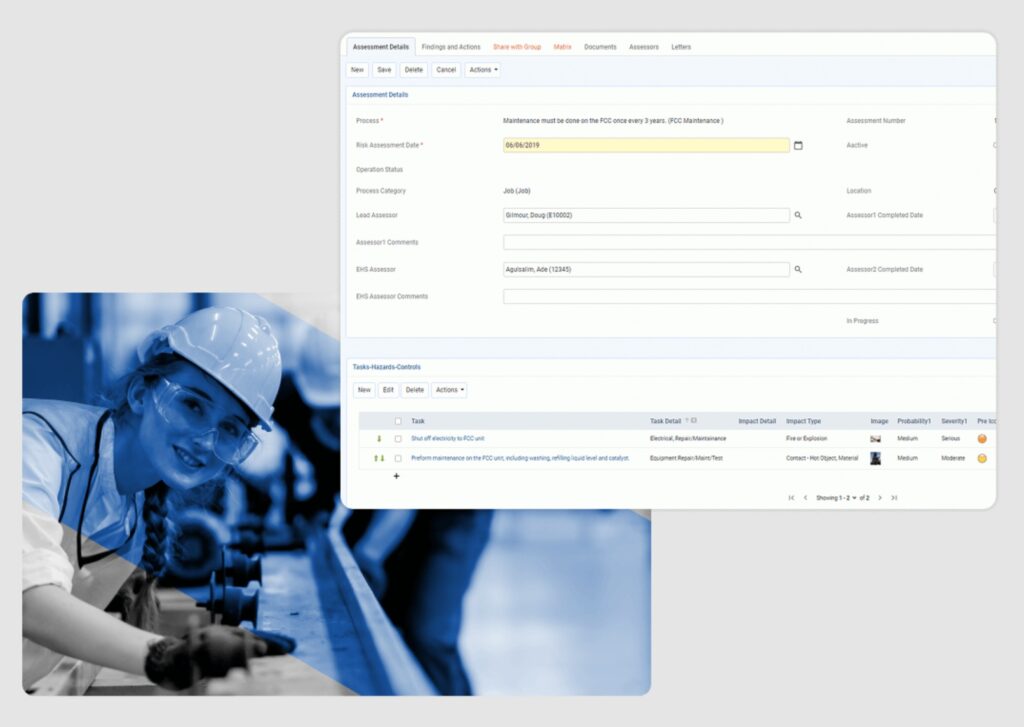
It’s not just about digitizing paper forms; it’s about transforming the entire approach to risk assessment so that it becomes dynamic, data-driven, and integrated into daily operations.
Challenges with Traditional Risk Management Processes
Many organizations still rely on paper-based checklists and manual sign-offs. While these tools aim to standardize processes, they often create unnecessary complexity. Workers spend more time filling out forms than discussing hazards, and supervisors struggle to review assessments promptly, especially in large, geographically dispersed operations.
Consider an example where every task requires a paper-based risk assessment reviewed by a single supervisor. With multiple teams and hundreds of tasks daily, the process becomes a bottleneck. Workers begin to complete forms in bulk during morning huddles just to get signatures, and eventually, supervisors begin pre-signing blank forms. The intent of risk assessment is to stimulate meaningful discussion about job hazards, but the process gets lost in the administration.
How Digital Risk Assessments Reduce Complexity
Simplicity is key to driving adoption. The easier it is to do something, the more likely people will do it. The same principle applies to risk assessments.
It’s why many organizations create risk assessment tools, like checklists, as part of their overall risk management processes. By creating standardized checklists, that workers can tick off to identify hazards and required controls, risk assessment is made simpler, more consistent, and more repeatable.
But checklists don’t inherently lead to good risk assessments. A good checklist isn’t one that enables workers to document every single thing that might happen, or create a bulletproof record that can stand up to legal scrutiny if something goes wrong. Good checklists are designed to stimulate conversation. To get workers thinking about what might happen, and what they need to do to prevent it from happening.
The tendency to throw everything into the proverbial risk assessment pot and create the most comprehensive, air-tight checklist possible won’t necessarily lead to better risk assessments. It’s more likely that the added length and complexity in the document will only make it more difficult to understand and navigate. Instead of talking about what might happen, workers will spend their time trying to fill out the form. In the end, there me be a record for an audit trail, but this doesn’t help to advance risk competence.
Digital Risk Assessment Tools: Why They’re Game-Changers
Traditional paper-based risk assessments often slow down work and fail to engage workers meaningfully. Digital tools solve these challenges by making the process faster, smarter, and more collaborative. Here’s how:
They Are Mobile-Enabled
Ensuring risk assessment processes are compatible with the way work is actually done is absolutely critical for an effective and sustainable program. A key benefit of a mobile-enabled EHS software solution is its ability to support more timely and effective communication amongst work teams operating across large geographies. Mobility provides workers real-time access to the breadth of an organization’s EHS platform from anywhere, at any time. This means that workers can access a library of relevant EHS content, from checklists, procedures and instructions at their fingertips from their mobile device, even when offline.
This flexibility ensures that workers always have access to tools to support effective pre-task risk analysis and work planning wherever they are. And since workers can share information in real-time, supervisors can complete the same reviews and stimulate meaningful conversation with their teams even when they’re not physically at the work location, helping to keep operations on schedule without compromising compliance to safety programs.
They Offer Built-In Best Practices
Many risk assessment software solutions offer organizations the ability to leverage best practice risk assessment methodologies out-of-the-box, from Job Hazard Analysis (JSA), to FMEA and What-If analysis, or easily configure the solution to an organization’s preferred assessment tools, including the risk factors, pick lists and risk formulas they require. Firms can even create and share templates and completed assessments with sister facilities to reduce the administrative burden and give teams a logical starting point to assess the risks in their activities.
They Provide Real-Time Data Analytics
By digitizing risk assessment data, organizations can aggregate data easily from multiple sources to create a holistic, 360° real-time view of operational risk, identify trends in risk exposure, and uncover insights that could inform decision making on strategy, prioritization of actions, and effective use of limited resources. By leveraging advanced EHS analytics features, risk data could help build predictive models to anticipate where injuries might occur next, so appropriate interventions can be actioned to keep people safe on the job.
These features create a collaborative environment where safety becomes part of the workflow rather than an administrative burden. Supervisors reviewing assessments instantly, even from different regions, keeps projects on schedule without compromising safety.
Questions for Effective Digital Risk Assessments
Todd Conklin’s framework for simplifying risk assessment highly relevant in today’s digital landscape. Modern platforms can integrate his three critical questions directly into workflows, ensuring that risk assessments are both practical and meaningful:
1. What hazards could seriously injure or kill me during this task?
This question forces workers to focus on the most critical risks rather than getting lost in minor details. In the digital age, platforms can enhance this by:
- Prioritizing High-Severity Hazards: Digital forms can use built-in logic to rank hazards by severity and likelihood, ensuring that life-threatening risks appear first. This prevents “checklist fatigue” and keeps attention on what matters most.
- Visual Aids and Contextual Prompts: Mobile-enabled platforms can embed photos showing common hazards for the task. This makes the question more tangible and helps workers visualize what could go wrong.
2. When, not if, things go wrong, what will keep me safe?
This reframes safety from a prevention-only mindset to one that includes resilience and recovery. Digital tools can strengthen this approach by:
- Prompting Recovery Measures: Instead of stopping at “what controls are in place,” digital forms can ask workers to identify backup plans—such as emergency shut-off procedures or escape routes—if primary controls fail.
3. Is that enough?
This question challenges assumptions and encourages critical thinking about adequacy. Digital platforms can make this more effective by:
- Peer Review and Collaboration: Platforms can enable supervisors or safety specialists to review assessments remotely and add comments, creating a feedback loop that reinforces the question.
By embedding these questions into digital workflows, organizations transform risk assessments from a checkbox exercise into a dynamic process that drives situational awareness and proactive safety decisions.
How to Get Started with Digital Risk Management
1. Review Current Process
Before jumping into digital solutions, take a hard look at the existing risk assessment process. Where are the pain points? Are approvals taking too long, creating bottlenecks that delay work? Are workers disengaged because the process feels like a paperwork exercise rather than a meaningful conversation about safety?
Conduct interviews with frontline employees and supervisors to understand their frustrations. Map out the workflow from start to finish and identify steps that add little value. For example, if workers are completing forms in bulk just to get signatures, that’s a sign the process is broken. This review will help prioritize what needs fixing and ensure technology addresses real problems, not just adds another layer of complexity.
2. Pick the Right Tech
Not all digital tools are created equal. When evaluating technology, look for features that align with how teams work. Mobile access is critical for field crews who need to complete assessments on-site. Offline mode ensures functionality in remote areas without connectivity. Customizable templates allow organizations to tailor risk assessments to different tasks and hazards, while analytics provide visibility into trends and performance.
Also consider integration with existing systems. Can the tool connect with the EHS platform or ERP? Scalability matters too; choose a solution that can grow with an organization. A flashy app that doesn’t fit a firm’s workflow will only frustrate users and waste resources.
3. Get Workers Involved
Technology adoption fails when it’s imposed without input from the people who use it daily. Engage workers early in the process. Ask them what would make risk assessment easier and more meaningful. Do they want fewer repetitive questions? More visual prompts like photos or diagrams?
By incorporating their feedback, organizations can build a solution that feels practical, not bureaucratic. This involvement also fosters ownership where workers are more likely to embrace tools they helped design. Consider pilot programs with small teams to gather insights before a full rollout.
4. Train and Support
Even the best technology won’t deliver results if people don’t know how to use it, or worse, don’t trust it. Training should go beyond technical instructions. Show workers how digital tools make their jobs safer and easier. Demonstrate real-world scenarios where mobile risk assessments prevent incidents or save time.
Provide ongoing support through help desks, quick reference guides, and peer champions who can assist colleagues in the field. Remember, confidence drives adoption. If workers feel uncertain, they’ll revert to old habits.
5. Measure and Improve
Digital tools generate valuable data, so use it. Track completion rates to see if assessments are happening consistently. Analyze hazard trends to identify recurring risks and target interventions. Monitor incident reductions to measure impact.
Don’t stop at reporting; use insights to refine process. For example, if data shows workers skip certain questions, maybe those questions aren’t relevant or need rewording. Continuous improvement ensures the risk management program stays effective and evolves with changing work conditions.
Transform Risk Management with Purpose-Built Technology
Risk assessment works best when it’s simple and meaningful. Digital risk management makes that possible by turning paperwork into real conversations and smart decisions. It keeps workers situationally aware and organizations ahead of risk.
The key question remains: If I was doing the work, what would I need to get myself thinking clearly about what could harm me? Digital tools help keep that question front and center, ensuring workers stay situationally aware and organizations stay ahead of risk.
Cority’s risk management software makes this approach practical: mobile assessments for field teams, real-time supervisor reviews across geographies, and analytics that turn individual risk data into enterprise-wide insights. No more pre-signed blank forms or checklist fatigue. Just the right tools to support meaningful conversations about hazards that matter most.
Learn More
Want to learn more about preventing injuries and fatalities? Check out our ebook, Preventing SIFs with Digitization: Reduce Serious Injuries and Fatalities with Technology