Over the last few decades, occupational injuries have been steadily decreasing. Unfortunately, fatalities have not followed the same pattern. That curiosity, why injuries were falling but fatalities were not, is the reason I based my PhD research on fatality prevention.
The latest numbers look more encouraging. In 2024, U.S. workplace fatalities declined for the second consecutive year, with 5,070 workers losing their lives at work, down from 5,283 in 2023. But it raises an important question: does a reduction in fatalities necessarily mean the conditions that contribute to them are changing?
My research found that risk starts upstream, long before anyone gets hurt. The question is whether our data does too.
In serious injury and fatality (SIF) prevention, those upstream conditions are called SIF precursors: high-risk situations where the controls that should protect workers are missing, ineffective or not being used.
This blog looks at the systemic causes behind workplace fatalities, the blind spots that leave our picture of risk incomplete, from ignored warnings to underreporting, and how critical controls can help us act further upstream.
Beyond Worker Error: The Systemic Causes of Workplace Fatalities
When something serious happens at work, it’s easy to stop and blame the worker. Maybe they didn’t follow a step. Maybe they missed a procedure. But it’s almost never where things started.
My research reviewed all 71 mining fatalities recorded in Western Australia between 2000 and 2017. I used Professor Michael Quinlan’s Ten Pathways framework to examine the systemic conditions behind each one. Quinlan identified ten pathways common to fatalities across mining in Canada, the U.S., Australia, New Zealand and the U.K., and the framework has since been used in aviation, maritime, manufacturing, and oil and gas.
What we found was that it was very rare for a fatality to be attributed to a single behavioural root cause:
- Two-thirds of fatalities involved multiple pathways. Only 18% involved a single pathway, and many involved four or five.
- Design and maintenance issues were identified in 66% of cases.
- Safety management system issues were identified in 55% of cases.
The most common pathways occurred well before the fatality. Hours, days, weeks, and very often years ahead. These failures stem from design and maintenance issues, missed hazard recognition, inadequate risk assessments, or failure to respond to warnings workers raised.
eBook: Download SIF Prevention: Reducing Serious Injuries and Fatalities with Technology
The Blind Spots in Incident Investigation Data
The data told me a lot, but what it didn’t tell me was just as interesting. Some of the blind spots I came across are:
- 15% of reports indicated no cause related to any of the pathways at all.
- Concerns raised by workers before an incident appeared in just 1% of reports.
- Breakdowns in worker-management trust and communication appeared in 4%.
- Economic and production pressure appeared in zero.
That doesn’t mean those conditions were absent. Fatality registers, as they exist, simply aren’t set up to capture them. We capture what’s easy to capture.
Workers tell a different story. Alongside the fatality data, we surveyed 2,492 workers over five years and asked them to rate each pathway. Economic pressure came out highest: 7.39 out of 10 across 680 responses. People in the workplace feel pressure to produce more and meet production targets, but those records don’t show it.
So are we accounting for the risk that’s actually happening? Lagging indicators remain important. But they show where harm has occurred, not necessarily where risk already exists in the system.
How Underreporting Hides SIF Precursors
And even the lagging indicators we rely on are incomplete. Research suggests underreporting ranges anywhere from 20% to 91%. That’s a huge gap: injuries we can never assess, investigate, or learn from.
And it gets worse under economic pressure. During recessions, injury rates actually fell, partly because of underreporting. People worry about being laid off. One U.S. study found that people who reported an occupational injury within six months of an economic recession were 20% more likely to be laid off. (I’ll come back to economic cycles in Part 2.)
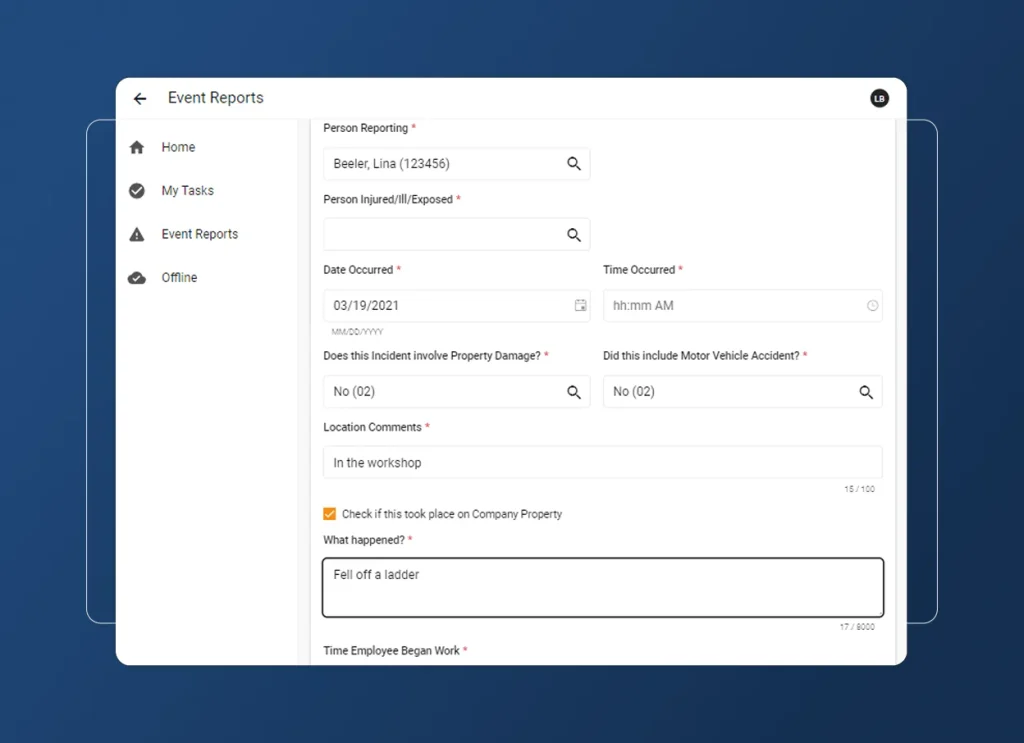
For SIF prevention, that matters. Not every minor injury or near miss has serious potential. But the ones that do are often the first place SIF precursors show up: a control that failed, a guard that was bypassed, a task that went ahead without the right permit. When those events go unreported, the precursor behind them stays hidden until it shows up in something far worse.
Why Frontline Workers Spot Safety Risks First
Frontline workers often spot the risk, but we hear most from managers and supervisors. In our survey, frontline workers rated their safety system 20% less effective than their managers did, year after year.
That gap is what silence looks like, measured. Worker concerns rarely made it into the official reports, but when I looked deeper at published fatality reports, prior warnings had been raised and ignored in 39% of fatality cases.
Controls Are Upstream Too
If risk starts upstream, so must the defences against it. In 2026, the International Council on Mining and Metals (ICMM) updated its Critical Control Management Good Practice Guide, ten years after its first publication, drawing on a decade of lessons from member companies putting it into practice.
What stood out to me is how closely those lessons echo what the fatality data shows. The update puts more weight on verifying that critical controls actually work, not just that they exist on paper. When design and maintenance issues show up in 66% of fatalities, that matters. A control nobody has checked is an assumption.
It also places stronger emphasis on organizational culture and frontline engagement. The people closest to the work are often the first to notice a control degrading. But as the fatality cases showed, those warnings too often go unheeded. Verification only works if what workers find gets heard.
The guide positions critical control management as part of enterprise risk management, bringing the most serious hazards into the same conversations where production targets are set. Given that economic pressure was workers’ highest-rated pathway in my research, yet appeared in none of the fatality reports, that visibility is overdue.
Building a Complete Picture of Workplace Risk
The data we collect shapes what we see. If our incident investigations stop at the worker, and our reports can’t capture production pressure or ignored warnings, we’ll keep missing where risk actually starts. Critical controls give us something concrete to watch, but only if we hear the people closest to them when they raise concerns. Making it safe for people to speak up, and visibly acting when they do, is one of the most practical places to begin.
In Part 2, I’ll zoom out further: how economic cycles and subcontracting shape safety performance, why AI can scale our blind spots, and what you can do next.
References
Bureau of Labor Statistics, U.S. Department of Labor. The Economics Daily, Fatal work injuries down in 2024. https://www.bls.gov/opub/ted/2026/fatal-work-injuries-down-in-2024.htm
International Council on Mining and Metals. (2026). Critical control management: Good practice guide. https://www.icmm.com/en-gb/guidance/health-safety/2026/ccm-good-practice-guide
Jenke, T., Boylan, J. L., Beatty, S., Ralph, M., Chaplyn, A., Penney, G., & Cattani, M. (2022). Fatality risk management: Applying Quinlan’s Ten Pathways in Western Australia’s mining industry. Safety Science, 146, 105494. https://doi.org/10.1016/j.ssci.2021.105494
Kyung, M., Lee, S.-J., Dancu, C., & Hong, O. (2023). Underreporting of workers’ injuries or illnesses and contributing factors: a systematic review. BMC Public Health, 23(1), 558. https://doi.org/10.1186/s12889-023-15487-0
Quinlan, M. (2014). Ten Pathways to Death and Disaster: Learning from Fatal Incidents in Mines and Other High Hazard Workplaces. The Federation Press.