


Scope 3 emissions account for ~75% of an organization’s total footprint on average and are notoriously challenging to measure. But that complexity also creates the potential to reduce emissions across your value chain, cutting costs, driving innovation, and improving transparency. This article helps organizations understand Scope 3 emissions reporting, why it matters, and how to manage it effectively to unlock value.
What Are Scope 3 Emissions? Definition, Categories & Examples
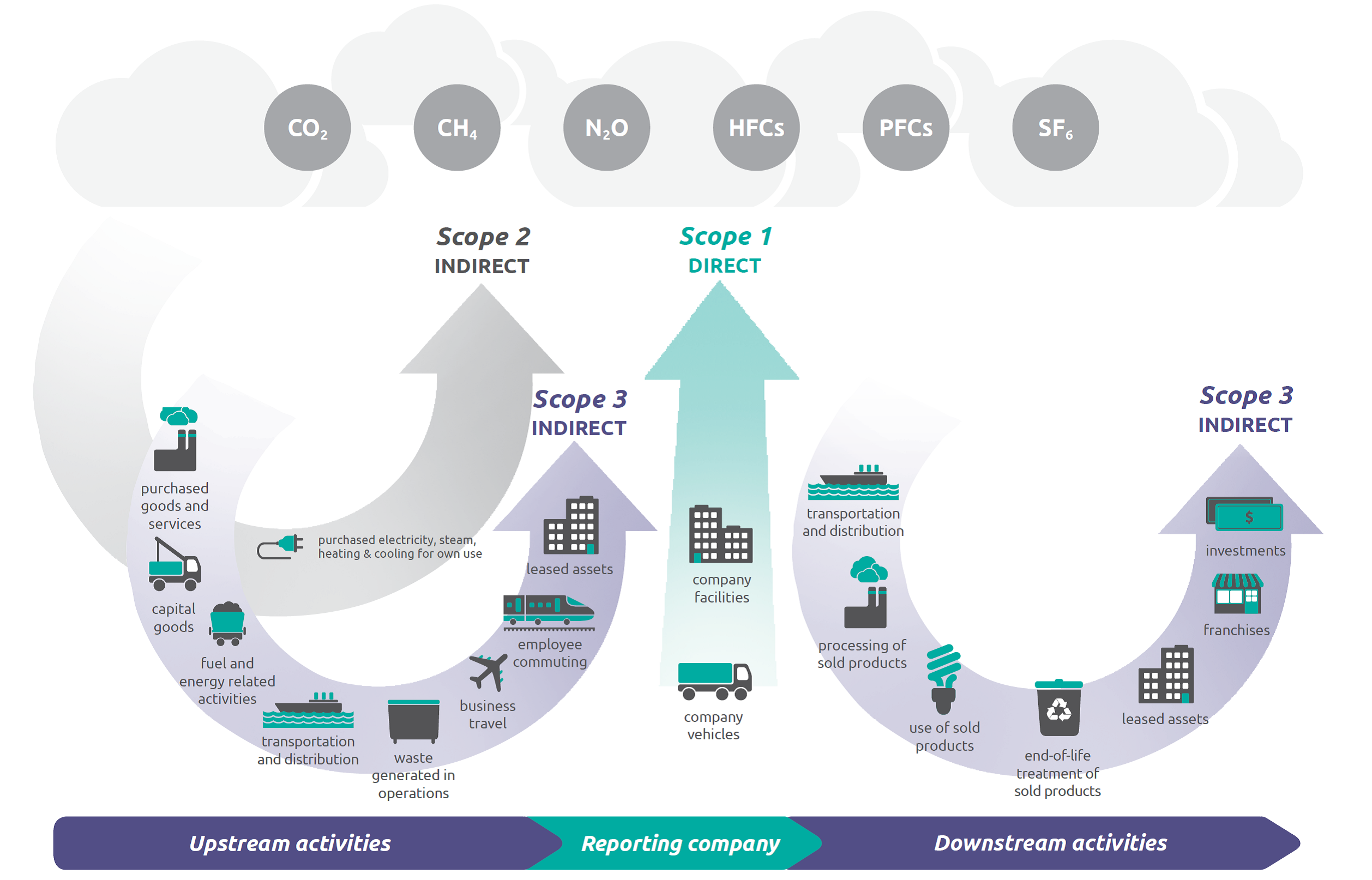
Scope 3 emissions are indirect emissions across your value chain, both upstream (suppliers) and downstream (customers). Unlike Scope 1 (direct) and Scope 2 (energy-related), these emissions occur outside your direct control, making them harder to measure, yet they represent the area with the largest potential impact.
Scope Breakdown
- Scope 1: Direct emissions from owned or controlled assets
- Scope 2: Indirect emissions from purchased energy
- Scope 3: All other indirect emissions in the value chain
Examples of Scope 3 Categories
Upstream: Purchased goods & services, business travel, employee commuting, waste, capital goods
Downstream: Product use, end-of-life treatment, transportation & distribution, investments, franchises
Why Scope 3 Emissions Reporting Matters: Regulations & Business Impact
Scope 3 Emissions Regulations by Region
While Scope 3 emissions management is primarily a business advantage, organizations still need to be aware of regulatory expectations. The landscape is constantly evolving, and companies should stay informed about emerging rules without letting compliance alone drive their strategy.
Region | Is Scope 3 Mandatory? | Notes |
EU | Yes | Required under CSRD for large companies beginning in 2024 (public) and 2025 (others) |
UK | Encouraged / Materiality-based | Scope 1 and 2 are mandatory; Scope 3 required if material and must be disclosed under SECR for listed companies |
Canada | Not yet (delayed) | Reporting paused; federal rules expected by 2028 under Canadian Sustainability Standards Board |
Australia | Phased in starting 2025 | Voluntary reporting for large entities begins in 2025; Mandatory Scope 3 under AASB S2 is expected from 2026 under Treasury reforms |
USA (Federal) | No | Scope 3 is not mandatory in the SEC’s final rule. The rule is currently stayed due to ongoing legal challenges. Companies may still choose to disclose Scope 3 voluntarily, especially if material. |
USA (California) | Yes | SB 253 requires Scope 3 disclosure for public and private companies with over $1B in revenue or with operations in California, starting 2026 |
Others | Encouraged / Sector-specific | New Zealand, Japan, and South Korea have voluntary or industry-specific guidance for Scope 3 reporting |
Business & Strategic Impact
Sustainability professionals and leaders should understand that addressing Scope 3 emissions can open up meaningful operational, financial, and reputational advantages across the business.
Manage Risk and Build Resilience
Measuring Scope 3 emissions helps companies identify and reduce risks across the value chain. It supports regulatory planning, stabilizes supply chains, and strengthens reputation by showing stakeholders a commitment to responsible environmental management.
Improve Efficiency and Unlock Financial Value
Tracking Scope 3 emissions highlights high-impact areas and guides targeted reductions. This can reduce costs, optimize supply chains, and improve operational efficiency. Companies managing emissions proactively may also gain access to sustainability-linked financing and enhance overall financial performance.
Drive Innovation and Competitive Advantage
Scope 3 emissions management encourages innovation in products and supply chains, differentiates companies as sustainability leaders, and creates a pathway for low-emission products and services. Collaborative action with suppliers can generate significant emissions reductions across the value chain.
Strengthen Stakeholder Engagement and Transparency
A Scope 3 emissions inventory fosters collaboration with suppliers and partners while meeting stakeholder expectations for transparency. It supports credible public GHG reduction targets and enables reporting that demonstrates environmental stewardship to investors, customers, and regulators.
Scope 3 Emissions Challenges: Data, Measurement & Control
Scope 3 emissions are, on average, 26 times bigger than direct emissions and span a vast, external network that cooperates with data and strategy beyond a company’s direct control. Historically, the biggest barriers to measure Scope 3 emissions have been:
Data and Measurement
- Reliable data is hard to get. Companies often rely on estimates that may not reflect reality.
- Calculations are complex, and many focus on easy-to-measure areas rather than the biggest sources.
- Tracking Scope 3 emissions requires resources and expertise many companies lack.
Lack of Control
- Scope 3 emissions come from activities outside the company, limiting influence.
- Suppliers may not provide detailed emissions data.
- Downstream emissions from customers or B2B products are often invisible.
Strategic and Organizational Gaps
- Many companies haven’t fully integrated Scope 3 emissions reporting into their strategies.
- Major emissions “hot spots” are often overlooked.
- Few set Scope 3 emissions reduction targets, and incentives to act are limited.
How to Reduce Scope 3 Emissions: 4 Strategic Actions for Leaders
If you’re in the leadership position, now is the time to:
1. Make Scope 3 Emissions Reporting a Strategic Priority
Scope 3 emissions management should be treated as a core business strategy, not just an ESG task. Leaders must bring value-chain emissions to the boardroom, set ambitious science-aligned targets, and ensure that incentives, from executive compensation to departmental objectives, are aligned to support meaningful reductions.
2. Collaborate Across the Value Chain
Since Scope 3 emissions occur outside a company’s direct control, leaders need to influence their suppliers and partners. This includes requesting emissions data, embedding climate criteria in procurement processes, supporting suppliers with training and resources, and collaborating with industry peers to drive reductions across the broader ecosystem.
3. Innovate and Optimize
Scope 3 emissions reporting provides the insights needed to redesign products, embrace circular economy models, and optimize logistics. Companies can reduce emissions through energy-efficient product design, material recirculation, and smarter transport planning. By proactively managing these emissions, leaders can also differentiate their brand, attract environmentally conscious customers, and create new business strategic benefits.
4. Leverage Technology and Data
Technology is key to turning complex Scope 3 data into actionable insights. AI and data platforms can identify the largest emissions sources and track performance over time. Collecting primary data from suppliers, rather than relying solely on industry averages, ensures more accurate reporting and helps companies prioritize the areas with the greatest potential for impact.
Scope 3 Emissions Tracking: Technology Solutions & Software
Tracking Scope 3 emissions across suppliers, logistics, and product lifecycles is one of the hardest parts of climate reporting, but the right technology can turn that complexity into clarity. Modern sustainability platforms can:
- Automate data collection and emissions calculations across all 15 Scope 3 categories.
- Provide a centralized hub for supplier engagement, data submission, validation, and tracking.
- Offer transparency and audit ready records, even when using estimates or secondary data.
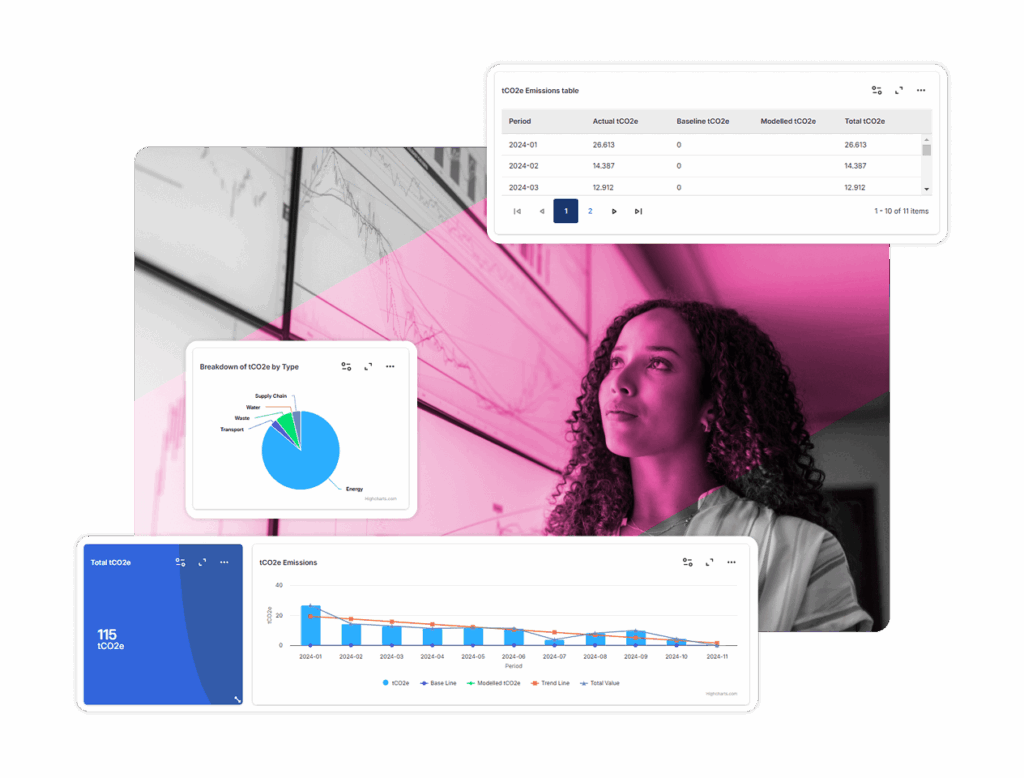
- Visualize emissions and supply chain risks, reduction opportunities, and enable informed decision-making.
- Integrate seamlessly with existing environmental and operational data systems.
Cority takes this step further by pairing advanced emissions management software with sustainability expertise. Organizations can automatically calculate and consolidate Scope 1–3 data using a global library of 1m+ verified emissions factors, validate data for assurance readiness, and access guidance from Cority advisors on methodology, materiality, and framework alignment. The result is consistent disclosures on Scope 3 emissions aligned with leading methodologies and disclosure programs, including the GHG Protocol and CDP, and supports reporting aligned to TCFD recommendations.
With a unified platform and expert support, Scope 3 reporting shifts from a spreadsheet burden to a strategic, insight-driven dashboard, helping organizations meet emerging requirements and build a stronger, more sustainable future. Discover Cority’s EHS+ Sustainability solutions or chat with an expert to explore how we can support your organization.
Sources:
Corporate Supply-Chain Scope 3 Emissions Are 26 Times Higher Than Operational Emissions – CDP
Unleashing the Power of Scope 3 Emissions – Strategy& (PwC)
Scope 3 Emissions Detailed FAQ – GHG Protocol
Corporate Value Chain (Scope 3) Accounting and Reporting Standard – GHG Protocol
The Scope 3 Playbook: Mitigation Strategies for Companies – Environmental Defense Fund (EDF)
Challenges and Solutions for Scope 3 Emissions – Deloitte
AI and Scope 3 Emissions: Turning Compliance into Opportunity – EY
Accelerating Scope 3 Reductions as 2030 Nears – Scope3
Why Firms Are Not Reporting Their Scope 3 CO₂ Emissions – Berkeley Center for Responsible Business