


AI for workplace safety is no longer a futuristic concept — it’s rapidly becoming a cornerstone of modern safety strategies.
According to Verdantix, 94% of firms report that implementing AI to boost Environmental Health and Safety (EHS) automation and realize time savings is a top priority within the next two years.1
This surge in interest reflects a growing recognition that AI can help organizations tackle some of their most pressing challenges: managing vast amounts of data, ensuring compliance with complex regulations, and improving safety outcomes.
How AI for Workplace Safety Delivers Measurable Results
AI is unlocking new levels of efficiency and insight for safety programs. Here’s how it delivers measurable impact:
1. Turns Real-World Inputs into Actionable Intelligence
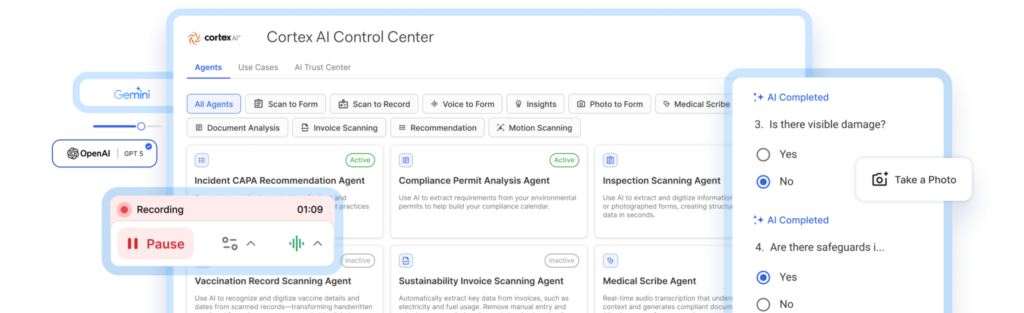
AI transforms voice memos, videos, and images into structured, usable data instantly. This means safety teams can capture observations effortlessly and convert them into insights that drive faster, smarter decisions.
2. Automates Routine Tasks and Frees Up Time
By eliminating repetitive steps like form-filling and note transcription, AI streamlines workflows and reduces administrative burden. This gives safety professionals more time to focus on high-value activities—like identifying risks and improving performance.
3. Delivers Personalized Guidance Where It Matters Most
AI embeds tailored insights directly into daily work, providing context-specific recommendations at the right moment. This ensures decisions are informed, timely, and aligned with your organization’s safety goals.
When AI is integrated into everyday processes, not treated as a separate tool, it amplifies visibility, accelerates analysis, and strengthens control over risks across the business. This is the next step in advancing safety performance.
Keys to Responsible and Effective Use of AI for Workplace Safety
AI is reshaping safety by turning real-world inputs into actionable insights, automating repetitive work, and guiding faster, better decisions. But progress must never come at the expense of trust. Responsible AI means securing sensitive safety data, ensuring transparency and human oversight, and embedding intelligence into workflows where it can make a measurable impact.
Before adopting AI for safety, make sure you ask:
Is your data secure?
Data protection is non-negotiable. Ensure any AI solution meets globally recognized security standards like ISO 27001, SOC 2 Type II, GDPR, HIPAA, and FedRAMP to safeguard sensitive information.
Is the technology built for purpose?
AI should be designed specifically for EHS use cases, not generic applications. Purpose-built solutions deliver more accurate insights and greater impact where it matters most.
Will it fit into your existing workflows?
The best AI solutions integrate seamlessly into current processes, reducing disruption and accelerating adoption, not forcing you to overhaul your entire system.
Will it stand the test of time?
Choose AI technology that’s reliable, scalable, and adaptable to your evolving needs. Flexibility ensures your investment grows with your organization.
How much control do you have?
Human oversight is critical. Every AI-driven decision should be transparent, observable, and auditable to minimize risks like errors and build confidence in safety-critical outputs.
8 AI for Workplace Safety Use Cases Organizations Are Deploying Today
Leading organizations are already putting AI to work in their safety programs to reduce risk, improve efficiency, and make smarter decisions. Here are some of the most impactful use cases being adopted right now:
1. Voice-Powered Incident Reporting
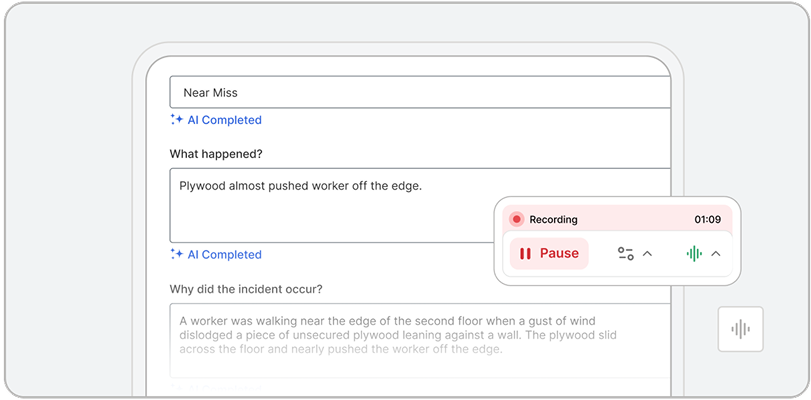
Companies are embedding AI into their existing CCTV infrastructure to continuously monitor behaviors and identify unsafe conditions. When AI detects a hazard, such as blocked exits or improper PPE, it sends instant alerts, enabling teams to act before an incident occurs. This proactive approach is helping businesses prevent harm and strengthen compliance.
2. Real-Time Hazard Detection via CCTV
AI-powered motion capture is revolutionizing ergonomic assessments. By analyzing job task videos, AI applies best-practice assessment methods to pinpoint posture-related risks and delivers prioritized recommendations. This enables organizations to proactively reduce musculoskeletal injuries, even with limited ergonomics experts on-site.
3. Ergonomic Risk Analysis Using Motion Capture
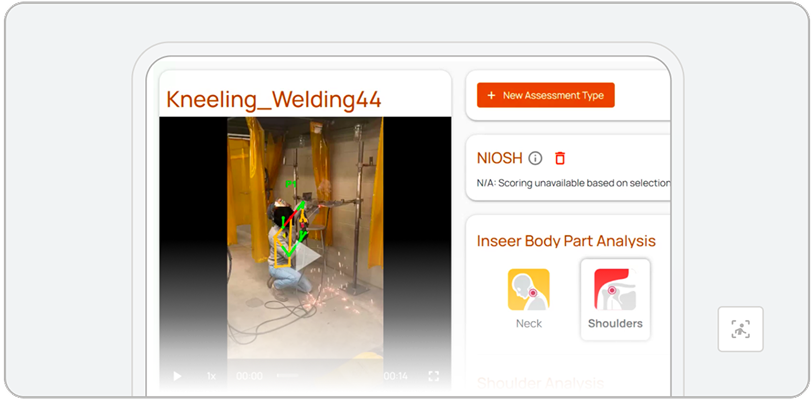
AI-powered motion capture is revolutionizing ergonomic assessments. By analyzing job task videos, AI applies best-practice assessment methods to pinpoint posture-related risks and delivers prioritized recommendations. This enables organizations to proactively reduce musculoskeletal injuries, even with limited ergonomics experts on-site.
4. Image-Based Incident Reporting
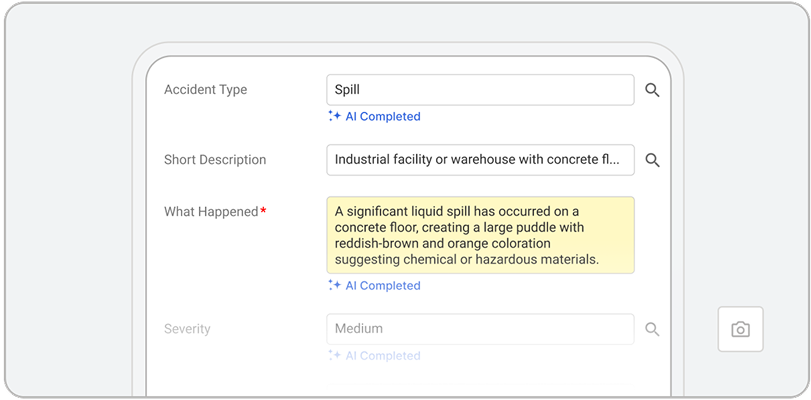
Instead of relying solely on written descriptions, organizations are leveraging AI to interpret photos from the field and auto-generate incident reports. This accelerates investigations, ensures critical details aren’t missed, and supports faster corrective actions.
5. Visual Inspection Automation
AI is being used to turn workplace images into completed inspection checklists instantly. This eliminates manual steps, improves accuracy, and ensures inspections are backed by visual evidence – helping teams focus on fixing issues rather than paperwork.
6. Paper-to-Digital Inspection Conversion
Despite digital transformation, many inspections still happen on paper. AI scanning agents convert handwritten forms into digital records instantly, reducing errors and keeping workflows moving.
7. Audit Insights for Continuous Improvement
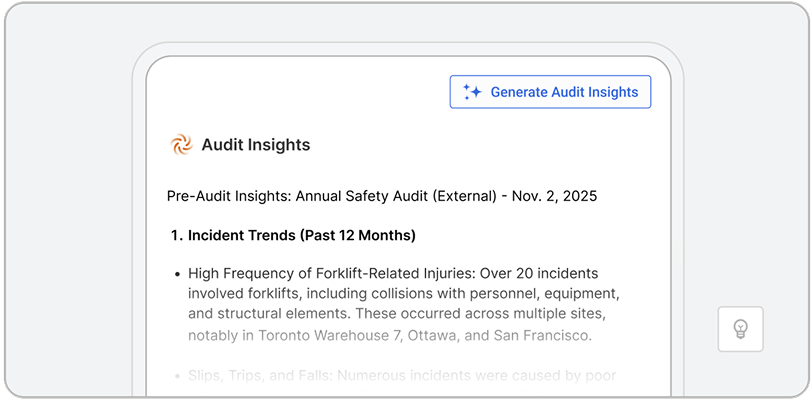
Organizations are applying AI to historical audit data to uncover recurring issues, blind spots, and open actions. These insights guide future audits, helping teams focus on high-risk areas and improve compliance outcomes over time.
8. Corrective Action Recommendations
AI is helping safety teams move faster after incidents by analyzing investigation data and suggesting potential findings and corrective actions. This reduces guesswork, accelerates remediation, and improves the quality of corrective measures.
Ready to Transform your Safety Program with AI?
The use cases above aren’t just ideas – they’re being deployed by organizations today to make safety smarter, faster, and more proactive. From real-time hazard detection to automated inspections and corrective action recommendations, AI is helping businesses reduce risk, improve compliance, and free up time for what matters most.
Interested in learning more?
Discover how these EHS AI capabilities can fit into your safety program and deliver measurable results.
Contact us today to schedule a demo for Cortex AI — and see how AI can transform your safety program.
Source:
Verdantix (2025), Global Corporate Survey 2025: EHS Budgets, Priorities And Tech Preferences