


Understanding the difference between health and safety is crucial for effective EHS management, yet these terms are often bundled into a single phrase.
While both disciplines aim to protect workers, organizations tend to focus heavily on safety like incident reduction, compliance, and avoiding costly regulatory penalties such as OSHA fines. Meanwhile, health initiatives like fatigue management, mental health, exposure prevention, and occupational health monitoring often receive less attention.
This pairing creates the illusion that Health and Safety function as one, but in reality, they have distinct focus areas and each deserves dedicated attention. Some may argue they work best as a package deal, but at Cority, we believe they deliver the greatest impact when treated as separate but complementary disciplines.
The Problem with Treating Health as a Subset of Safety
When we think about Safety, we tend to think it to be more incident-driven and reactive. Organizations focus on preventing immediate harm like slips and falls, equipment hazards, hand injuries, chemical spills.
These activities are essential, but because Safety deals with urgent risks, it often overshadows Health.
When we look at the bigger picture and the underlying causes of many incidents, health factors frequently play a role. Fatigue, stress, untreated symptoms, respiratory exposure, lack of fitness for duty – these originate in health, not safety. When Health is treated as a subset of Safety, early risk indicators get buried, leading to long-term consequences such as higher workers’ compensation costs, reduced productivity, and poorer worker well-being.
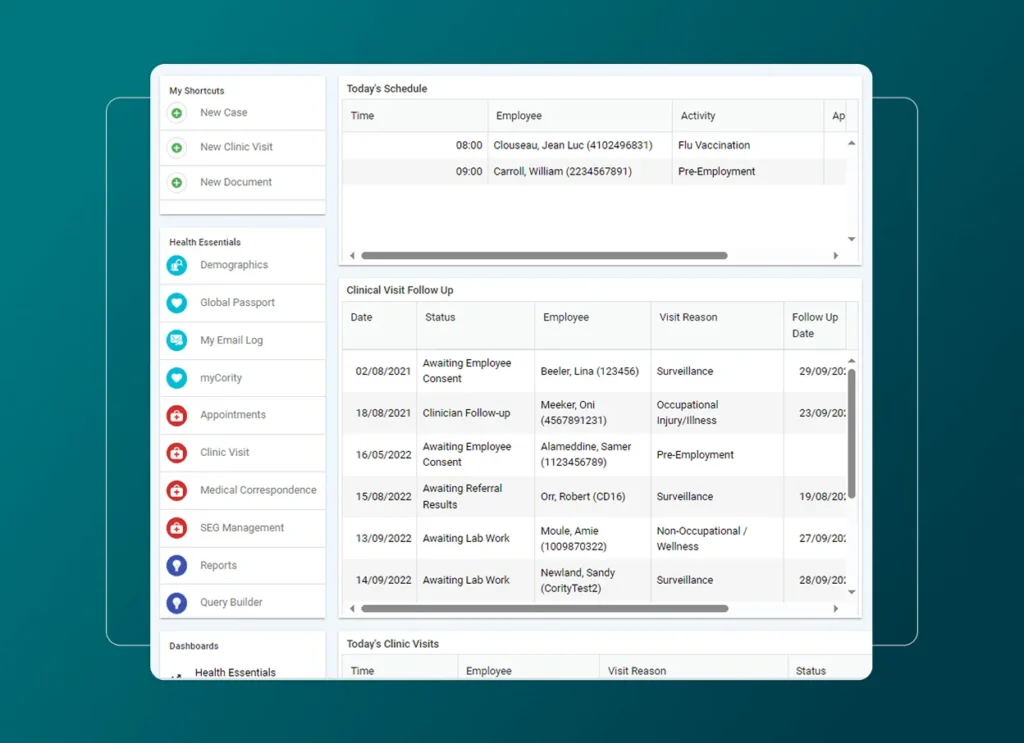
Why Health and Safety Should Be Separate Functions in EHS
Health involves various data when tracked properly – clinical data, longitudinal tracking, and workforce readiness. These data reveal patterns that directly influence safety outcomes. A strong Health program helps reduce incidents before they occur.
Think of Health and Safety like bread and butter. Health is the bread, the foundation of the whole structure. Without strong, healthy bread, the sandwich can’t hold together. Safety is the butter or jam, an essential layer that enhances, protects, and completes the whole. When the bread (Health) is solid, the sandwich holds together effortlessly, and the layer on top (Safety programs) work as intended. But if the bread is weak, no amount of butter or jam can prevent it from falling apart – just as safety programs can’t fully prevent incidents when employee health is compromised.
There’s a common misconception that “good safety=good health.” Although this saying is true, the inverse is equally (and often more) powerful:
Good health enables good safety.
And if we’re being bold, good health eventually leads to better ROI. When your workforce is healthy, operations run smoother, injuries decrease, and productivity increases. Plus, your organization’s reputation will follow.
Health Enables Prediction, Not Just Prevention
Safety typically focuses on preventing known hazards. Health, on the other hand, provides the predictive lens organizations need to anticipate risk.
Health data such as health surveillance results, exposure trends, fit-for-duty evaluations, symptom tracking, and return-to-work readiness can all help identify who is at risk, when interventions are needed, and which areas of the workforce require proactive support.
As an example: for operational teams specifically in the food sector, integrating specialized tools like FoodReady’s Sanitation can help streamline daily compliance, task verification, and overall food safety.
Predictive insights lives in Health, not only in traditional Safety workflows.
Health vs Safety: Why Separation Creates Stronger EHS Programs
When combined into one bucket, Safety tends to dominate because it is incident-heavy and compliance-driven.
Separating Health allows each function to have clearer ownership, better resource allocation, specialized workflows, and stronger strategic focus.
Here’s to visualize it:
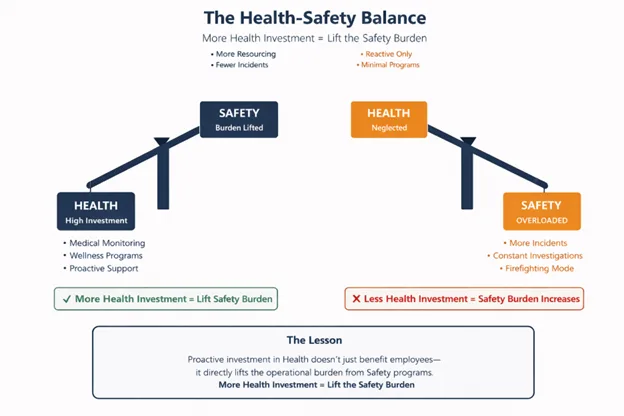
When organization focus heavily in Health through medical monitoring, wellness programs, and proactive employee support, the scale tips in their favor. Healthy, well-monitored employees mean fewer incidents, reduced hazard exposures, and less reactive firefighting with Safety Teams.
Conversely, when Health is neglected, the Safety side becomes overloaded. Suddenly, Safety professionals find themselves managing more incidents, conducting more investigations, and constantly putting out fires. The lesson is clear: proactive investment in health doesn’t just benefit employees, it directly reduces the operational burden on Safety programs.
Looking ahead, Health data becomes a performance driver, giving organizations an advantage in managing operations, supporting workers, and building a more proactive EHS culture.
Re-Elevating Health for a More Effective EHS Strategy
All components of EHS matter, but Health has traditionally been overshadowed by Safety. Health is not simply part of Safety, it is the foundation that makes safe operations possible. Organizations that elevate and separate Health gain better visibility into risk, stronger outcomes, and a more resilient workforce.
At Cority, we believe Health should stand alone as its own module with tools designed specifically for this purpose. Talk to us to learn how you can strengthen the Health component of your EHS strategy.