


Heat stress management is no longer a summertime checklist item. For EHS professionals in construction, mining, manufacturing, and other high-exposure industries, heat risk has become an operational reality that demands a structured, year-round program.
OSHA’s proposed Heat Injury and Illness Prevention standard went through public hearings in June 2025 and is now under review — meaning federal requirements could land at any time. In the meantime, enforcement is already happening. OSHA has extended its National Emphasis Program on heat to April 2026, driving roughly 7,000 heat-related inspections, 60 general duty clause citations, and nearly 1,400 hazard alert letters.
States are moving even faster. California implemented a new indoor heat standard triggered at 82°F. Washington made outdoor heat protections year-round with mandatory cool-downs at 90°F. Oregon adopted permanent heat rules keyed to the heat index.
For organizations operating across multiple jurisdictions, that alone justifies standardizing heat stress programs.
What Is Heat Stress and Why Does It Matter Year-Round?
Heat stress occurs when the body is unable to cool itself sufficiently to maintain a healthy core temperature. It can lead to a range of heat-related illnesses, from heat cramps and heat exhaustion to heat stroke — which can be fatal if not treated immediately.
Most EHS professionals are familiar with these risks. What many organizations still underestimate is how often dangerous heat exposures occur outside of extreme weather events.
According to the International Labour Organization, nine out of ten worker exposures to excessive heat happen outside of a heatwave. Eight out of ten heat-related injuries also occur outside of a heatwave. That reframes the problem entirely.
Heat stress is not driven by three bad weeks in July. It is a year-round risk shaped by task intensity, PPE requirements, acclimatization status, and environmental conditions that can shift within a single shift.
The ILO projects that by 2030, roughly 2.2% of total working hours globally will be lost to heat stress — the equivalent of approximately 80 million full-time jobs and $2.4 trillion in annual economic losses. For organizations, this translates directly to productivity loss, increased injury rates, and growing regulatory exposure.
Common Challenges in Heat Stress Management
Most organizations already have some elements of a heat stress program in place. The challenge is that those elements are often fragmented, inconsistent, or reactive in ways that create real gaps when conditions escalate. Five common barriers show up repeatedly.
Data fragmentation. Nearly every organization dealing with heat risk has heat-related data scattered across weather feeds, WBGT devices, job rosters, PPE requirements, training logs, exposure calculations, clinic notes, and incident records. The problem is that none of it talks to each other.
A multi-site manufacturing company operating in five states was pulling WBGT from handheld devices, work rosters from ERP, PPE classifications from Excel, and incident data from a clinic EMR. Because the data was fragmented, the company missed a pattern: workers on the 2-to-10 shift were regularly exceeding safe WBGT action levels.
When data is fragmented, early warning signs are invisible. Heat stress symptoms cannot be connected to shift patterns. And when OSHA comes knocking, a unified audit trail does not exist.
Inconsistent heat stress indicators. Organizations frequently mix and match heat index, ambient temperature, and WBGT — but these metrics do not measure the same thing. WBGT is the only indicator that accounts for radiant heat, humidity, and air flow.
A large utilities company used heat index in the field but WBGT in their training materials. Supervisors were confused about when to call breaks. The heat index said conditions were fine; WBGT said they were well into the yellow zone.
When metrics conflict, decisions vary. One site calls mandatory breaks at an 88°F threshold while another waits until workers feel ill. That inconsistency undermines defensibility, especially during an OSHA investigation.
Manual exposure calculation risks. Manual calculations are a silent killer of program effectiveness.
A construction company calculated metabolic load, PPE adjustments, and work-rest cycles on laminated cards. Two things went wrong: supervisors often rounded numbers because the calculations were confusing, and they did not document their work. There was no audit trail.
Manual calculations introduce variance, inconsistency, and compliance risk that compounds across sites and shifts.
Lack of real-time alerts. A supervisor checking weather conditions once per shift is not sufficient. On a day with rising humidity and low airflow, the WBGT can cross an action level at 11:07 — long before the next scheduled check. Two workers reported heat stress symptoms by noon.
Without real-time alerts, programs are reactive instead of proactive. They miss the very moment where intervention matters most. This is especially important because dangerous heat exposures overwhelmingly occur on routine days, not during declared heatwaves.
The insight-to-action gap. This is the one nearly every organization underestimates.
A national food company had great dashboards, real-time WBGT, worker rosters, even historical trends. But when alerts fired, frontline supervisors did not know the exact next step. Sometimes they shortened shifts. Sometimes they told workers to take it easy. Sometimes they ignored the alert entirely because they were not sure if it was actionable.
The implication is straightforward: if the last mile does not know what to do — or there is no documentation that they did it — the program is not defensible.
For more on how to structure controls within a heat stress safety program, see How Digital Solutions Are Helping Transform the Hierarchy of Controls.
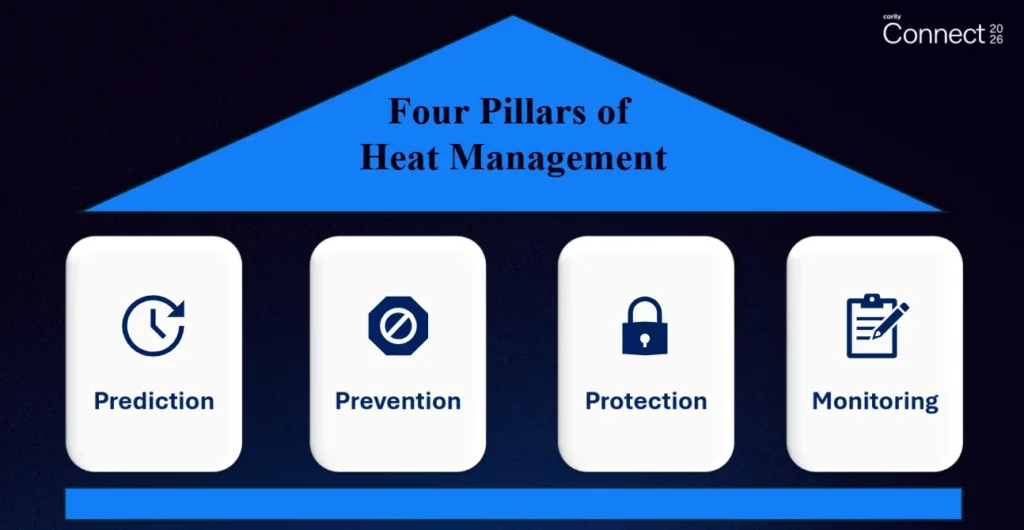
Four Pillars of an Effective Heat Stress Management Program
Building an effective program does not require starting from scratch. It requires organizing existing capabilities — and filling gaps — around four key areas: prediction, prevention, protection, and monitoring.
Together, these four pillars create a proactive, data-driven framework that reduces risk and protects workers.
Prediction: Anticipating Heat Risk Before Exposure Occurs
Prediction means using environmental and individual data to anticipate when and where an elevated risk of heat stress might occur — before workers are exposed to dangerous conditions. This is where defensible indicators matter.
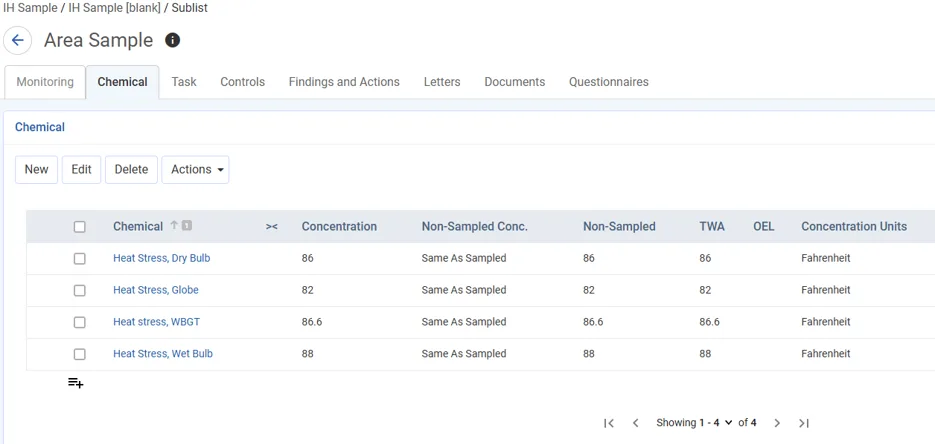
WBGT — the Wet Bulb Globe Temperature — is the preferred metric because it accounts for ambient temperature, humidity, wind speed, and radiant heat. All of those factors influence how the body handles heat. Relying on heat index or ambient temperature alone provides an incomplete picture and creates confusion when different metrics tell different stories.
Beyond environmental data, prediction also involves identifying which workers and tasks carry the highest risk. Workers with certain health conditions, those on specific medications, or those wearing heavy PPE are more susceptible to heat-related illness. Tasks with high metabolic loads — heavy lifting, grinding, welding — generate additional internal heat that compounds environmental exposure.
A strong prediction capability connects both environmental inputs and individual risk factors into a single view.
Prevention: Reducing Heat Exposure Through Controls
Heat stress prevention focuses on applying engineering and administrative controls to minimize exposure before it becomes dangerous. This includes installing cooling stations, adjusting work-rest cycles based on real-time conditions, implementing hydration protocols, and scheduling high-intensity tasks outside of peak heat periods.
The key is moving beyond fixed schedules. Static work-rest cycles that never change regardless of conditions leave gaps on days when conditions deteriorate faster than expected. A more effective approach ties work-rest cycles directly to WBGT readings and task intensity, so the response adapts as conditions change.
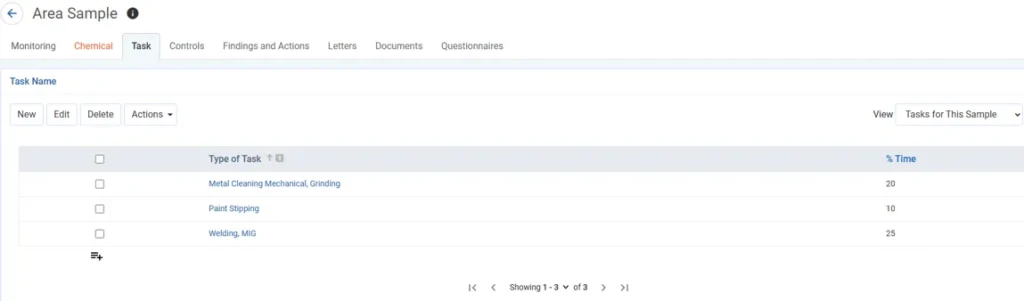
Cority’s Monitoring module includes a Tasks tab with a % Time column — an underutilized feature that allows organizations to document the actual duration of tasks and associated activities. Reporting on this data can provide insight into effective work-rest cycle planning that reflects what is actually happening in the field, not just what is written in a policy document.
Protection: Ensuring Workers Are Fit for Heat Exposure
Even with strong prediction and prevention controls in place, organizations still need to ensure that workers are fit for duty and able to work in hot environments without increasing their risk.
Heat stress training, health screenings, risk assessments, job hazard analyses, acclimatization programs, and education on recognizing heat stress symptoms are all essential components. Workers who understand the risks, know what to do to prepare, and know how to respond when conditions change are far less likely to suffer heat-related illnesses.
Acclimatization is particularly important. Workers new to a hot environment or returning after time away need a structured ramp-up period.
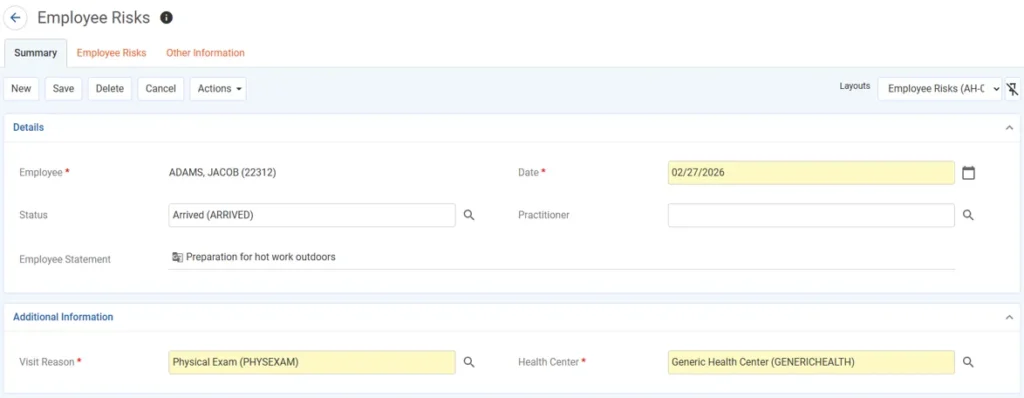
This is also where occupational health and industrial hygiene data come together. Worker health heat-risk profiles that integrate clinical data with exposure history provide a more complete picture of individual vulnerability. Preventing heat stress at work is not just about environmental controls — it is about understanding who is most at risk and making sure those individuals are identified, monitored, and supported.
Monitoring: Measuring Heat Stress Program Effectiveness
Monitoring closes the loop. It means collecting real-time data and using it to adjust safety measures dynamically — not waiting until the end of the season to review what happened.
One approach is having workers use myCority to record WBGT measurements in the field. Business rules can be configured to send alerts to supervisors when certain thresholds are met, triggering specific control protocols.
Questionnaires can be used almost like a permit — recording temperatures, tasks, events, and other data as the work progresses. That data feeds into reports and dashboards that paint a picture of how effective the heat stress program is functioning over time.
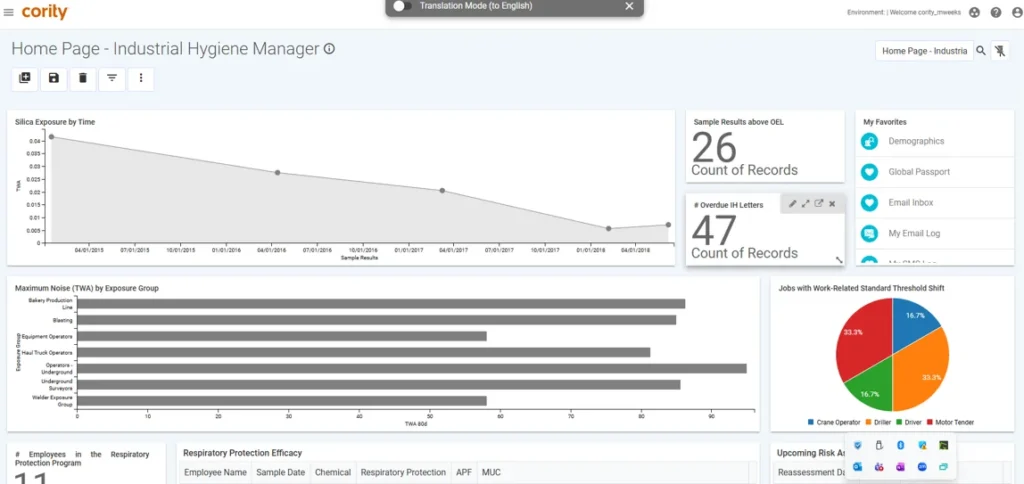
This kind of ongoing monitoring transforms a heat stress program from a set of policies into a living system. It makes trends visible, supports continuous improvement, and creates the documentation trail that matters most during audits and investigations.
A Roadmap for Getting Started
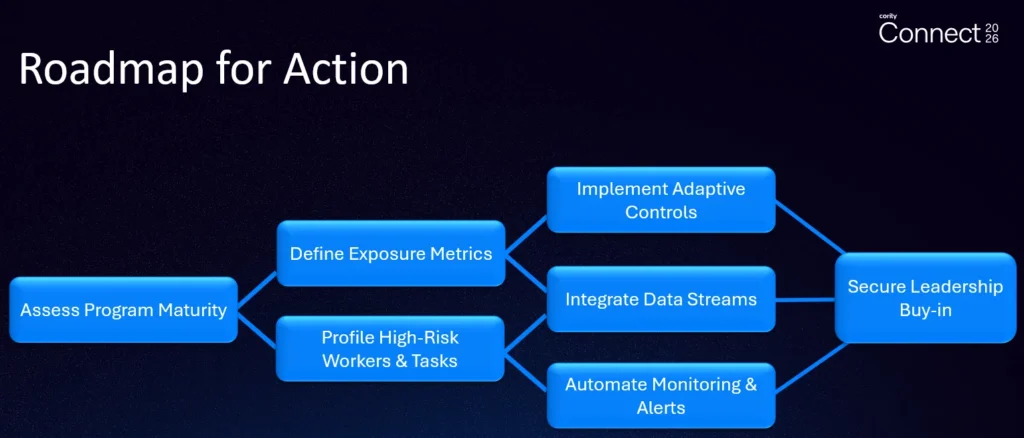
Standing up or strengthening a heat stress management program does not have to happen all at once. A practical roadmap breaks the work into manageable steps.
Assess program maturity. Start with a gap analysis. Compare the current heat program against recognized best practices and regulatory guidance. Are thresholds documented? Are controls defined? Is health surveillance integrated?
Define exposure metrics. Adopt defensible indicators like WBGT — not just ambient temperature. Document thresholds and action levels. This is critical for both compliance and audit readiness.
Profile high-risk workers and tasks. Identify who is most vulnerable — workers with health conditions, those on certain medications, or those wearing heavy PPE. Profile tasks with high metabolic load. This information should be accessible, not buried in separate systems.
Implement adaptive controls. Move beyond fixed schedules. Use dynamic work-rest cycles informed by WBGT and task intensity. Pair these with hydration protocols and acclimatization programs.
Integrate data streams. Break down silos. Link industrial hygiene, occupational health, clinical, and safety data into a unified view so that heat stress decisions are based on the full picture — not fragments of it.
Automate monitoring and alerts. Real-time alerts are not optional. They are frontline prevention. Configure threshold-based notifications that tell supervisors exactly what action to take — not just that a reading is elevated.
Secure leadership buy-in. A heat stress program that only lives within the EHS team will always be limited. Connecting heat risk to productivity, liability, and regulatory exposure helps make the case for the resources and organizational support needed to sustain the program.
Building a Heat Stress Program That Protects Workers and Withstands Scrutiny
Heat stress is not going away. Temperatures are rising, regulations are expanding, and the expectation for defensible, documented programs is increasing every year.
Organizations that treat heat stress management as a year-round operational discipline — rather than a seasonal reaction — will be better positioned to protect workers, maintain productivity, and demonstrate compliance when it matters most.
Cority’s Health Cloud brings industrial hygiene, occupational health, and safety data together in a single platform — giving EHS teams the prediction, prevention, protection, and monitoring capabilities they need to build a heat stress program that works.
See also: The Heat is On — On-Demand Webinar