


Managing PFAS is rapidly turning into one of the toughest challenges for Environmental, Health, and Safety (EHS) teams. The rules around per- and polyfluoroalkyl substances keep changing. Federal reporting deadlines have been pushed back, but states are stepping up enforcement, CERCLA hazardous substance rules still apply, and the EU is introducing some of the strictest limits in the world.
For EHS professionals, it’s clear that PFAS needs attention. The real question now is how to manage it effectively across the whole organization.
The problem is that PFAS doesn’t fit into just one environmental program. It affects chemical management, waste handling, water monitoring, and compliance reporting, often all at once. Most organizations already have systems for each area, but PFAS overlaps them, creating gaps that only show up when someone asks a PFAS-specific question.
This article explains how to set up a PFAS management program that goes beyond reacting to each issue as it comes up. Instead, it focuses on building a structured approach that can grow as rules and expectations change.
Why PFAS Cuts Across Programs
Chemical management, waste tracking, water programs, and compliance are all well-established functions within most environmental teams. Each one manages its own data, follows its own workflows, and reports against its own requirements. Individually, they work well.
The issue is that PFAS isn’t limited to just one area. For example, a question like “Where are we using PFAS, and how is it leaving our site?” might mean gathering details from chemical inventories, waste profiles, water discharge data, and compliance records. If this information is sorted by program instead of by substance, gaps appear — not because the data is missing, but because it’s spread out across different systems, teams, and processes.
This kind of fragmentation leads to real risks. When different groups handle separate parts of the PFAS issue without a shared view, responses become slower and less consistent. Questions that should take hours to answer can end up taking days. As regulatory demands rise at both federal and state levels, the cost of this fragmentation only increases.
Building a PFAS management program begins by recognizing that it spans multiple programs. The aim isn’t to replace what already works, but to add a layer that makes PFAS visible and traceable across existing systems.
How PFAS Enters Through Change
PFAS rarely enters an organization by choice. Instead, it appears through normal operational changes that happen regularly in any manufacturing or industrial setting.
For example, a supplier might change a product and add a PFAS compound that wasn’t flagged before. Sometimes, a new material is approved quickly to keep production moving, without a full review of downstream effects. A process change might alter waste or water characteristics, bringing up new PFAS issues that weren’t considered before. Often, PFAS is only noticed when a regulator, permit, or customer request prompts a closer look.
Each of these situations is routine by itself. The problem is that the PFAS impact of these changes often isn’t reviewed when the change happens. A PFAS management program adds structure to these common cases, so PFAS issues are spotted earlier and handled consistently, instead of being found after the fact.
Following the Pathway: From Materials to Discharge
To manage PFAS effectively, you need to track it through the entire process, from when it enters the organization to when it leaves.
PFAS usually comes in through materials and processes, which is generally clear. What’s harder to track is what happens after that. As materials go through production, PFAS moves into waste streams and leftovers. From there, it can affect water discharges. Most monitoring, reporting, and regulatory focus happens at these later stages, like discharge permits, waste shipments, and water sampling results.
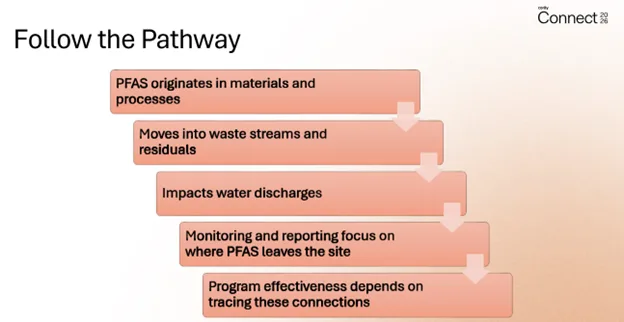
This is also where most questions come up from an environmental perspective. A sampling result might start an investigation. A permit condition could need an explanation. Waste records may require tracing back to the source. If the links from chemical use to waste handling to water discharge aren’t already mapped, each question turns into a separate investigation.
A PFAS management program links chemical use, PFAS waste management, and water monitoring. This way, environmental professionals can respond consistently and trace impacts without having to start over each time.
Moving From Ad-Hoc to Programmatic PFAS Management
Today, many organizations deal with PFAS one situation at a time. A request comes in, a sampling result brings up a question, or a new permit adds a requirement. Each case is handled separately, often with manual tracking and follow-up across different teams. Responses can differ by site, by who is involved, or just by how much time people have.
This approach might work for now, but it doesn’t scale. As PFAS rules grow and more questions come in from regulators, customers, and internal teams, handling things ad-hoc leads to more coordination work, more inconsistency, and a higher risk of missing something important.
A programmatic approach adds structure without making things more complicated than they need to be. It involves setting clear responsibility for PFAS-related tasks, identifying PFAS consistently across chemical, waste, and water programs, and making sure compliance activities are aligned. This way, the organization can give a single, reliable answer to any PFAS question, no matter which team gets it.
The goal of a PFAS management plan isn’t to create a perfect system. It’s to make PFAS manageable over time, so environmental teams spend less time scrambling for information and more time actually managing risk.
What PFAS Management Looks Like in Practice
With a PFAS management program in place, several key things change in how operations run.
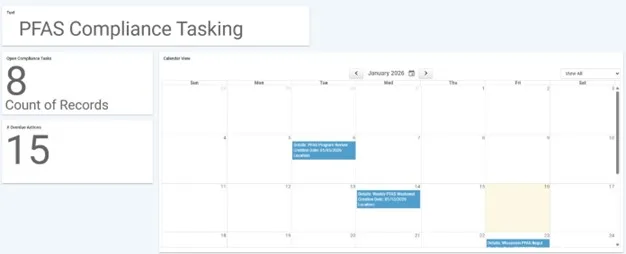
Visibility across programs. Rather than tracking PFAS activity in separate systems, a centralized view brings together compliance tasks, chemical inventories, waste profiles, and water data. Environmental teams can see what’s happening, what’s coming up, and where PFAS needs attention, without having to manually connect information from different programs.
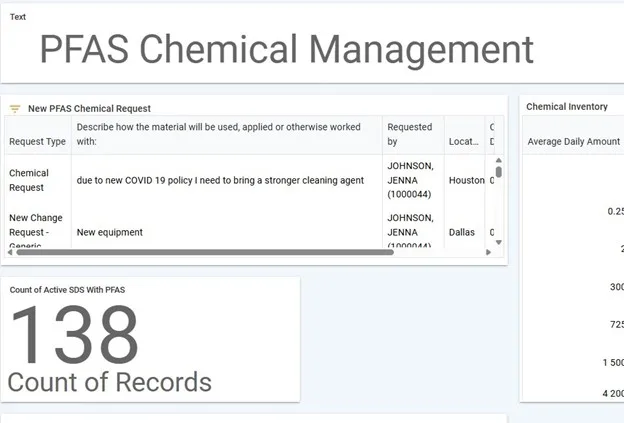
Chemical approval is the first control point. Chemical management is where PFAS can be caught early. If new chemical requests include a PFAS check as part of the approval process, PFAS-containing materials are identified before they arrive on site—not after they’ve already entered waste or water streams. This approval step acts as the entry point for the wider PFAS program.
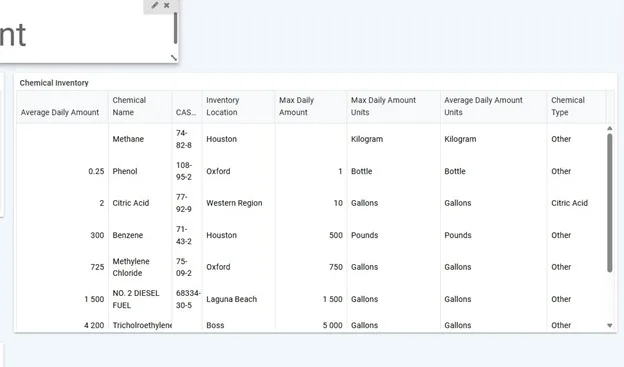
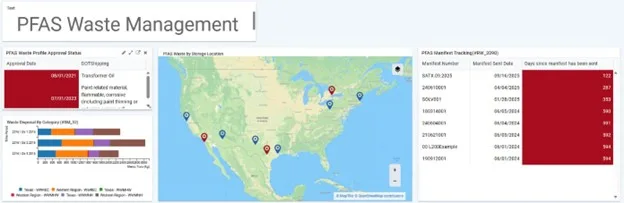
Waste tracking and traceability. For waste, PFAS-containing streams should be identified, managed with approved waste profiles, and tracked from generation to disposal. Storage locations should be easy to find for inspections and reviews. These steps help the PFAS program show clearly how PFAS leaves the operation, whether through waste shipments or wastewater, using traceable information.
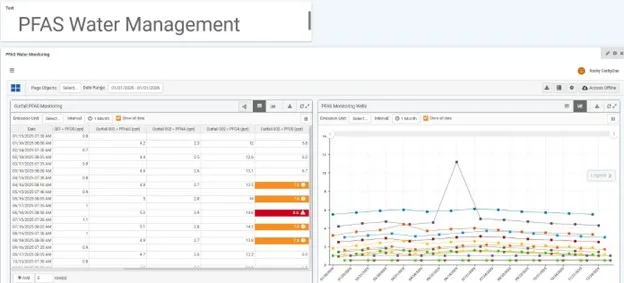
Water monitoring and trend analysis. Water monitoring is where PFAS data is usually most organized and regularly checked. Outfall summaries make it easy to spot high values, while groundwater trends show if a result is a one-off or part of a bigger pattern. Both help teams interpret results consistently and follow up in a coordinated way, instead of reacting to each data point separately.
You don’t have to start from scratch to build these capabilities. If your organization already uses an EHS platform for chemical, waste, and water data, PFAS management can build on what you have. The main thing is to connect those existing programs with a focus on PFAS.
Frequently Asked Questions About PFAS Management
What is PFAS management?
PFAS management is a structured approach to identifying, tracking, and controlling per- and polyfluoroalkyl substances across an organization’s chemical, waste, water, and compliance programs. Rather than handling PFAS issues one at a time, a PFAS management program connects existing environmental programs under a substance-specific lens to improve consistency, traceability, and regulatory readiness.
Why does PFAS cut across environmental programs?
PFAS affects chemical management, waste handling, water monitoring, and compliance reporting simultaneously, but most organizations manage those functions separately. A single PFAS question — such as “where is PFAS being used and how is it leaving the site?” — can require pulling data from multiple systems, teams, and workflows that were not designed to connect at the substance level.
What is the difference between ad-hoc and programmatic PFAS management?
Ad-hoc PFAS management handles each issue as it comes up, with manual tracking spread across different teams and responses that can vary by site or situation. A programmatic approach defines clear ownership, identifies PFAS consistently across programs, and aligns compliance activities so the organization can produce a single, defensible answer to any PFAS-related question.
How does PFAS enter an organization?
PFAS typically enters through routine operational changes rather than deliberate decisions. Common scenarios include a supplier reformulating a product to include a PFAS compound, a substitute material being approved without a full downstream review, or a process change altering waste or water characteristics in ways that introduce new PFAS considerations.
Building a PFAS Program That Lasts
The rules and requirements around PFAS keep growing. State bans and reporting rules are expanding, federal CERCLA liability still applies, and drinking water compliance deadlines now stretch to 2031. For EHS professionals, PFAS management isn’t a future concern, it’s already a permanent part of the job.
Organizations that set up a structured PFAS management program now will be better able to handle regulatory changes, answer stakeholder questions confidently, and manage risk across their operations. Those that stick with ad-hoc methods will find it harder and harder to keep up.
Cority’s Environmental Cloud helps organizations bring PFAS-related work together across chemical management, waste handling, water monitoring, and compliance, all in one platform.